If you're importing an EN1860 charcoal grill or multi-fuel BBQ line for European, UK, or North American retail chains, product certificates and factory audit reports aren't paperwork afterthoughts—they're the gatekeepers that decide whether your container clears customs and reaches supermarket shelves on time. A missing food-contact report or an expired social audit can freeze an entire seasonal purchase order at the port.
At KEYO, we've passed compliance reviews for global retailers including Walmart, Costco, Aldi, Auchan, Tesco, Sodimac, and Carrefour. This practical buyer's checklist explains which product standards apply to each grill category, how food-contact rules differ by country, and why on-site environmental compliance protects your supply chain from unexpected shutdowns.
1. Mechanical & Safety Standards by Fuel Type
Every barbecue fuel category triggers a distinct set of laboratory safety standards. Matching the exact standard to your SKU list at the RFQ stage prevents expensive redesigns later:
| Grill Category | Europe & UK Standards | North America & Australia Options |
|---|---|---|
| Charcoal & Kettle Grills | GS EN1860-1 (solid-fuel safety), REACH | ASTM / retailer drop & stability protocols; ETL on select models |
| Gas Grills & Pizza Ovens | CE (EU 2016/426), UKCA, REACH | CSA / ETL (ANSI Z21.58), AGA (Australia) |
| Electric Grills | CE (LVD/EMC), UKCA, RoHS, REACH | Region-specific voltage & electrical listings |
| All Food-Contact Grates | LFGB (Germany), DGCCRF (France), EU 1935/2004 | US FDA 21 CFR food-contact compliance |
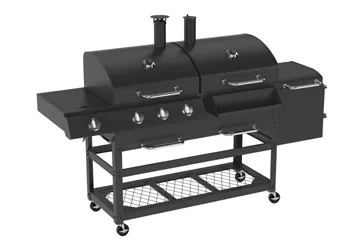
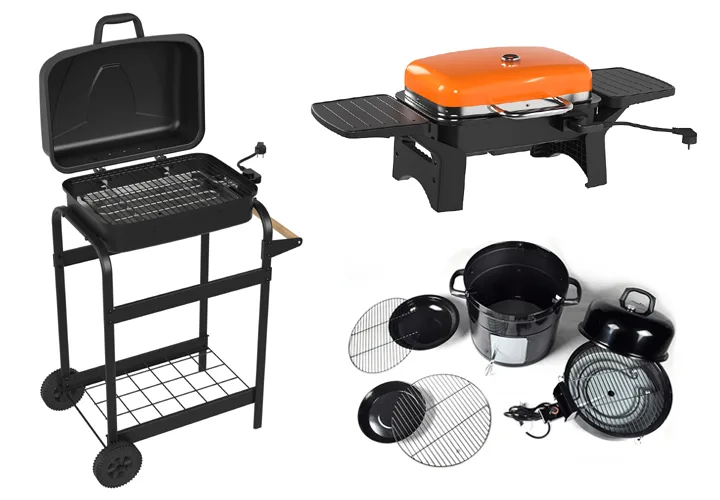
For solid-fuel units—such as our YH22017D enamel kettle grill or KY19022 portable charcoal grill—GS EN1860-1 tests structural stability under load, ensures welding joints leave zero sharp burrs that could injure consumers, checks handle heat rise, and verifies that firebowls don't collapse or drop live embers during prolonged burns.
2. Food-Contact Testing: LFGB, DGCCRF, and FDA
Any component that touches food—chrome-plated grids, porcelain-enameled cast-iron grates, stainless steel warming racks, or pizza stones—must pass food-contact migration tests. Importers selling into Germany need LFGB clearance; retailers selling into France (such as Auchan or Carrefour) require DGCCRF (CCRF) documentation; and US retail programs require FDA compliance. Testing through globally recognized third-party labs like Intertek ensures your technical file is accepted by major supermarket QA teams without repeat sampling.
3. Factory Social, Quality & Environmental Audits
Big-box retailers audit the factory as closely as the product. Before onboarding a new BBQ supplier, procurement compliance teams typically request current audit reports across three pillars:
- Quality & Production Systems: ISO 9001 quality management and FCCA (Factory Capability & Capacity Assessment) verifying equipment maintenance, incoming raw-material inspection, and 100% pre-shipment checks by our 12-person QC team.
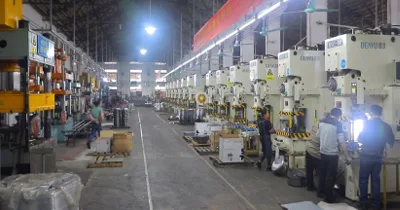
- Social Responsibility: BSCI and Sedex B-member (SMETA) audits confirming fair working hours, workplace safety, and transparent labor records across our 400-worker Foshan plant.
- Sustainability & Materials: ISO 14001, Higg Index, BEPI, EcoVadis, and FSC (for certified wood shelves, handles, and FSC-certified retail packaging cartons).
4. Why Self-Built Wastewater Treatment Matters to Retail Buyers
Here's a supply-chain risk many buyers only discover after a missed delivery: enamel pickling, surface pre-treatment, and coating lines generate industrial wastewater. Factories without compliant on-site treatment face sudden three-month environmental inspection shutdowns right in the middle of spring peak production.
KEYO eliminates that risk by operating a self-built, independently managed wastewater treatment system inside our 40,000㎡ Foshan manufacturing facility. Every drop of process water runs through collection, coagulation and sedimentation, air flotation, biochemical treatment, and multi-stage filtration for compliant discharge and partial reuse—backed by precision PAC/PAM dosing, real-time effluent monitoring, and daily operational logs open for client inspection.
5. How to Request a Compliance Pack Before Ordering
When you're vetting factories for your next wholesale BBQ grill tender, don't settle for verbal assurances. Ask for current factory audit summary IDs (BSCI DBID / Sedex ZC number), confirm which lab reports already cover your chosen SKU, and clarify any incremental testing fees for custom OEM finishes or regional gas regulators. Contact our export team to request KEYO's compliance documentation package alongside your quotation.
6. Step-by-Step Compliance Timeline for New Seasonal Programs
Even experienced importers occasionally underestimate how long third-party lab testing takes when launching a custom private-label BBQ SKU. Build these realistic milestones into your backward schedule so you never miss your spring store reset:
- Week 1 — Specification Lock & Gap Review: Share your target destination countries (for example, Germany + France + UK, or USA + Canada) with KEYO's account manager. We map which existing valid certificates already cover your chosen chassis and identify any market-specific delta tests (such as a new grate coating or country-specific gas regulator).
- Week 2 — 7-Day Physical Sample Build: Our R&D and sampling workshop produces golden samples using the exact production steel, enamel glaze, grate material, and hardware destined for mass production.
- Weeks 3–5 — Accredited Third-Party Lab Testing: Submit golden samples to Intertek or your retailer's nominated lab for GS EN1860-1 mechanical/burn safety, LFGB/DGCCRF/FDA food-contact migration, REACH/RoHS chemical screening, or CE/UKCA/ETL gas and electrical approval.
- Weeks 6–10 — Mass Production & In-Process QC: Once test reports pass, our 400-worker Foshan factory executes stamping, in-house enamel/powder coating, assembly, and 100% functional safety checks (ignition, gas leak, or electrical leakage) alongside your retail packaging print run.
- Pre-Shipment Audit & Container Release: Final AQL inspection by our 12 QC specialists—or your appointed third-party agency—verifies carton markings, safety warning labels, instruction manuals, and master-carton barcodes before FOB or DDP dispatch.
7. Common Compliance Mistakes That Trigger Customs Holds
Most port delays come from avoidable documentation mismatches rather than failed hardware. Watch out for four frequent errors:
- Mismatch Between Sample & Mass Production Coating: If you test a chrome-plated grate under LFGB but later switch to a different non-stick coating without updating the food-contact test, supermarket QA will reject the shipment. Lock bill-of-materials specs early.
- Missing Mandatory Warning Labels & Languages: European EN1860-1 and CE directives require permanent, legible safety warnings (such as carbon monoxide and indoor-use prohibitions on charcoal and gas units) in every official language of the destination country.
- Expired Social Audit Windows: Major retail chains like Walmart, Carrefour, Aldi, Auchan, and Tesco check BSCI, Sedex/SMETA, and FCCA validity dates before issuing purchase orders. Always confirm audit renewal dates at the start of the buying season.
- Ignoring Packaging Sustainability Rules: European retailers increasingly require FSC-certified corrugated cartons and recyclable pulp inserts instead of loose expanded polystyrene foam. KEYO's FSC certification and free dieline design team help you meet these rules cleanly from day one.
Compliance shouldn't feel like guesswork. Because KEYO operates an ISO 9001 and ISO 14001 certified plant with an open-door wastewater treatment facility and verified audit history across global supermarkets, our team guides you through every certificate cleanly. Request KEYO's compliance pack and quotation for your next BBQ program.